Choosing a low air loss mattress for home care can make a major difference in comfort, skin protection, and day-to-day caregiving. The right system helps reduce heat and moisture while supporting pressure redistribution.
Below, we focus on practical buying factors so you can compare options with confidence and choose a mattress that fits the user’s needs, bed size, and care routine.
Best 10 Low Air Loss Mattress for Home Care Picks for 2026
Advanced Pressure Redistribution
Drive Medical Med-Aire Low Air Loss Mattress Replacement System

- Alternating pressure and low air loss
- 20 replaceable air bladders
- Audio-visual alarm and pressure monitoring
Best For: Home care users needing a full replacement system
Compact Low-Air Therapy
Proactive Medical Protekt Aire 2000
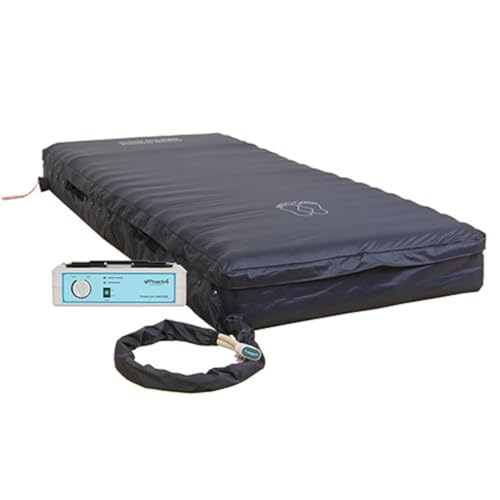
- Low air loss plus alternating pressure
- 18 laser holes for cooler, drier support
- 5-inch overlay with 350 lb capacity
Best For: Home care users wanting a lighter overlay system
Customizable Wound Care Support
ProHeal Low Air Loss Alternating Pressure Mattress
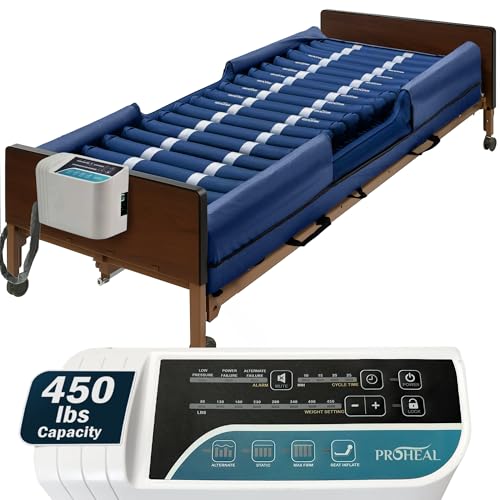
- 20 bladders with 4 cycle settings
- 18 laser-size holes for moisture control
- Cell-on-cell base plus digital alarms
Best For: Home care patients needing adjustable therapy and ventilation
Longer Full-Size Support
Drive Medical 14029 Med-Aire Low Air Loss Mattress

- Alternating pressure and low air loss
- 84-inch length with 450 lb capacity
- Fluid-resistant 4-way stretch PU cover
Best For: Taller users needing a full-size replacement mattress
Editor Pick
Low Air Loss Mattress for Home Care with Alternating Pressure

- Alternating pressure and low air loss support
- 20 air cells with pillow feature
- 350 lb capacity with included pump
Best For: Home care users who want a balanced pressure-relief system with microclimate control
Most Feature-Rich
Quiet 3-Layer Low Air Loss Mattress with Accessories

- 3-layer design with 20 air chambers
- Quiet pump, CPR valve, and carry bag included
- 400 lb capacity for broader support
Best For: Home care buyers who want a complete, medical-grade system with extra accessories
Simple Comfort Pick
Plush Low Air Loss Mattress System for Adults

- Low air loss feature for pressure management
- Plush feel with water-repellent material
- Machine washable care instructions
Best For: Adults who prefer a softer, simpler low air loss mattress system
Alternating Pressure Relief

- 16 air chambers help redistribute pressure
- Ultra-quiet pump with variable settings
- Waterproof vinyl cover supports up to 350 lb.
Best For: Home caregivers needing adjustable pressure relief and quiet operation
Foam-Backed Support
Med-Aire Assure Air Mattress System

- 5-inch air layer sits on a 3-inch foam base
- Helps prevent, treat, and heal pressure ulcers
- Fluid-resistant nylon cover; pump included
Best For: Adults needing low air loss support with extra foam stability
Smart Alarm System
Drive Medical Med-Aire Melody Mattress

- Alternating pressure and low air loss system
- Visual low air pressure alarm adds monitoring
- 20 air cells with removable cover for servicing
Best For: Caregivers who want monitoring features and easier maintenance
Advanced Pressure Redistribution – Drive Medical Med-Aire Low Air Loss Mattress Replacement System
If you’re comparing a low air loss mattress for home care, this Drive Medical system is built for users who need both pressure redistribution and moisture control. It combines alternating pressure with low air loss, plus a vapor-permeable cover and 20 replaceable air bladders to help support skin protection and comfort at home or in a facility.
Best For: Home care users who need a full replacement mattress with alternating pressure, low air loss, and caregiver alarms.
Pros:
- Combines alternating pressure and low air loss for pressure redistribution and microclimate control.
- 20 individual 8-inch air bladders with a built-in pillow feature for added head stability.
- Vapor-permeable cover helps reduce moisture, friction, and heat buildup.
- Audio-visual alarm system and automatic pressure monitoring support ongoing use.
Cons:
- At 8 inches thick, it is a dedicated replacement system rather than a simple topper.
- Requires pump-based operation, so setup is more involved than a standard mattress.
This is a strong pick if you want a medically focused mattress replacement system with built-in support features and monitoring. It suits care environments where pressure relief and moisture management matter every day.
Compact Low-Air Therapy – Proactive Medical Protekt Aire 2000
The Proactive Medical Protekt Aire 2000 is a low air loss mattress for home care users who want a compact overlay with dual therapy. It pairs low air loss and alternating pressure in a 5-inch mattress overlay, while 18 laser holes help keep the patient cooler and drier.
Best For: Users who want a lighter-weight overlay system for pressure relief and moisture control.
Pros:
- Low air loss and alternating pressure therapies in one system.
- 18 laser holes are designed to help keep the patient cool and dry.
- Kink-resistant tubing supports more reliable airflow.
- 350 lb weight capacity fits many adult care needs.
Cons:
- It is an overlay, not a full replacement mattress.
- At 5 inches, it offers less mattress depth than thicker replacement systems.
This model makes sense when you want dual therapy without moving to a full mattress replacement. It is a practical option for home care settings where moisture management and pressure support are both priorities.
Customizable Wound Care Support – ProHeal Low Air Loss Alternating Pressure Mattress
If you’re looking for a low air loss mattress for home care with more therapy controls, this ProHeal model is designed for pressure sore prevention and wound care support. It uses 20 individual bladders, four alternating cycle options, and 18 laser-size holes to help manage moisture and create a more comfortable microclimate.
Best For: Home care patients who need customizable therapy settings and strong moisture-wicking support.
Pros:
- 20-bladder design with 4 alternating cycle times: 10, 15, 20, and 25 minutes.
- 18 laser-size holes help ventilate moisture and sweat.
- Cell-on-cell base retains air in the lower layer during power failure.
- Includes digital alarms for low pressure, power failure, and alternating failure.
Cons:
- At 30 pounds, it is heavier than simpler overlay options.
- Requires pump and alarm management, so it is less simple than a basic mattress.
This mattress stands out for users who want more adjustment and monitoring in a home setting. Its combination of ventilation, alarms, and backup-style cell design adds peace of mind for ongoing pressure care.
Longer Full-Size Support – Drive Medical 14029 Med-Aire Low Air Loss Mattress
This low air loss mattress for home care is a full replacement system that combines alternating pressure with low air loss for pressure redistribution and skin protection. The longer 84-inch length, 20 air cells, and 4-way stretch PU cover make it a strong fit when you need a wider, more complete setup with pump-based support.
Best For: Taller users or caregivers who need a full-size mattress replacement with higher weight capacity.
Pros:
- Combines alternating pressure and low air loss for microclimate control and pressure redistribution.
- 20 air cells and a pillow feature help with immersion and head stability.
- 4-way stretch PU cover is fluid resistant, low shear, and vapor permeable.
- Higher 450 lb weight capacity and 84-inch length suit larger care needs.
Cons:
- Full replacement system may be more than some home users need.
- Requires a digital pump and control setup for operation.
For home care situations that call for a longer mattress and stronger capacity, this Drive Medical system is well equipped. It balances comfort, protection, and monitoring in a format meant for more demanding care routines.
Editor Pick – Low Air Loss Mattress for Home Care with Alternating Pressure
If you need a low air loss mattress for home care that balances pressure redistribution with microclimate control, this McKesson system is built for that job. It combines alternating pressure and low air loss technology with a water-resistant nylon stretch cover, making it a practical option for helping manage pressure points in home or long-term care settings.
Best For: Home caregivers looking for an alternating pressure and low air loss mattress with a 350 lb capacity and an included pump.
Pros:
- Combines alternating pressure and low air loss to support pressure redistribution and moisture control
- 20 individual air cells plus pillow feature for immersion, envelopment, and head stability
- Static mode or 10-minute alternating cycles for adjustable use
- Water-resistant nylon cover helps protect against friction and moisture
Cons:
- Supports up to 350 lbs, which is lower than some competing options
- Single-layer air-cell design may feel less substantial than multi-layer systems
- Mattress system includes multiple components, so setup is more involved than a basic foam bed
Overall, this is a solid fit if you want a home-care pressure relief system with both alternating pressure and low air loss features. The included variable pressure pump and replaceable air cells add flexibility, while the cover and cell design focus on comfort and skin protection.
Most Feature-Rich – Quiet 3-Layer Low Air Loss Mattress with Accessories
For shoppers comparing a low air loss mattress for home care, the Glory Medical MA-9T stands out for its 3-layer build, alternating inflation and deflation cycles, and quiet pump. It is designed to support pressure relief, circulation, and reduced pressure points while also including practical extras like a repair kit, carry bag, and CPR valve.
Best For: Home care setups that need a medical-grade mattress with a 400 lb capacity, quiet operation, and included accessories.
Pros:
- 3-layer design with 20 air chambers for alternating pressure support
- Quiet pump and CPR valve add convenience and emergency readiness
- Supports up to 400 lbs for a higher weight capacity than some rivals
- Includes carry bag, repair kit, adapter, and user manual
Cons:
- Vinyl construction may not appeal to everyone looking for a softer feel
- At 7 inches thick, it is slightly thinner than some 8- or 9-inch models
- Details list multiple dimensions, so checking bed fit before purchase is important
This is a well-rounded choice if you want a feature-rich air mattress system for home care. The included accessories and higher weight capacity make it especially appealing for buyers who want a more complete setup right out of the box.
Simple Comfort Pick – Plush Low Air Loss Mattress System for Adults
The Protekt Aire 4000 is another low air loss mattress for home care to consider if you want a plush-feeling mattress system with water-repellent construction. Its low air loss feature is the key selling point, making it a straightforward option for adult users who need pressure management in a home or care environment.
Best For: Adults who want a plush low air loss mattress system with simple, care-friendly materials.
Pros:
- Low air loss feature helps with pressure management and airflow-related comfort
- Plush firmness may suit users who prefer a softer feel
- Water-repellent construction adds a practical layer of protection
- Machine washable care instructions make maintenance easier
Cons:
- Supplied details are limited compared with the other two models
- No pump or accessory list is provided in the notes
- Size is listed as one-size, so fit should be confirmed before buying
If you want a simpler low air loss option and value a plush feel, this Protekt system is worth a look. It appears geared toward straightforward use rather than packed-in extras, so it makes the most sense for buyers focused on core mattress features.
Alternating Pressure Relief – Vive 8" Low Air Loss Mattress
If you’re comparing a low air loss mattress for home care, this Vive model is built around pressure redistribution and comfort for someone with limited mobility or who is bedfast. Its 16 air chambers, variable pressure pump, and static head section give you flexibility for daily use while helping reduce pressure points.
Best For: Home caregivers who want an adjustable, quiet mattress topper for pressure ulcer prevention and comfort support.
Pros:
- 16 air chambers with alternating inflation and deflation for pressure relief
- Variable pressure settings, including a static mode for general use
- Ultra-quiet pump for less disruption during rest
- Waterproof vinyl cover and 350 lb. support rating
Cons:
- Mattress pad and pump have different warranty terms
- Vinyl construction may feel less plush than foam-based systems
Overall, this is a practical low air loss mattress for home care when you want active pressure management without a complicated setup. The quiet pump and adjustable settings make it easy to tailor for comfort and routine use.
Foam-Backed Support – Med-Aire Assure Air Mattress System
For shoppers looking for a low air loss mattress for home care with a more supportive base, this Med-Aire Assure combines 5 inches of air with a 3-inch foam foundation. It is designed to assist in preventing, treating, and healing pressure ulcers while staying within a 350 lb. patient limit.
Best For: Adults who need alternating pressure and low air loss support with the added stability of a foam base.
Pros:
- Air system plus 3-inch foam base for added support
- Designed to assist with pressure ulcer prevention and treatment
- Fluid-resistant nylon cover for easier care
- Includes pump and supports patients up to 350 lb.
Cons:
- Hand wash only care may be less convenient
- Wider profile at 35 inches may not fit every bed setup
This model makes sense if you want a mattress system that blends active pressure relief with a foam foundation. The result is a more structured feel than an air-only topper, which may suit home care routines well.
Smart Alarm System – Drive Medical Med-Aire Melody Mattress
If you want a low air loss mattress for home care with a stronger focus on monitoring and serviceability, the Drive Medical Med-Aire Melody adds useful control features. It offers alternating pressure and low air loss, adjustable weight settings, a visual low air pressure alarm, and removable 8-inch air cells for easier maintenance.
Best For: Caregivers who want an active mattress replacement system with air-pressure monitoring and easy cleaning.
Pros:
- Alternating pressure and low air loss for pressure redistribution and microclimate control
- Visual low air pressure alarm helps flag issues quickly
- 20 air cells with head pillow section for comfort and support
- Removable air cells and spot-cleanable nylon cover for servicing
Cons:
- Still limited to a 350 lb. maximum capacity
- Requires attention to settings and pump function for best results
Compared with simpler systems, this one adds more oversight and adjustability for home use. That makes it a solid choice when monitoring pressure and keeping maintenance straightforward are both important.
How We Picked These Low Air Loss Mattress for Home Care Options
Our selection focuses on the features that matter most in a home setting: pressure redistribution, moisture management, alternating pressure support, weight capacity, mattress dimensions, cover durability, and ease of setup. We also looked for systems that balance clinical-style performance with use at home, where caregivers often need simpler controls and dependable operation.
Quick Comparison: What Sets These Mattresses Apart
Not every option serves the same need. Some models are better for higher-risk users who need more active pressure relief, while others are suited to lighter-duty home use or as a bed topper. Pay close attention to whether the product is a full replacement system or a topper, because that affects both comfort and support.
Key Buying Factors for a Low Air Loss Mattress for Home Care
Pressure Relief and Alternating Air
Look for a system that matches the user’s ulcer risk, mobility level, and time spent in bed. Alternating pressure can help reduce sustained loading, while low air loss helps manage heat and moisture.
Size, Thickness, and Bed Compatibility
Measure the bed carefully before buying. Home care mattresses commonly need standard widths, but lengths and heights can vary. Make sure the mattress fits the frame, rails, and any repositioning aids.
Pump Noise, Controls, and Daily Use
A quiet pump and straightforward settings are especially valuable at home. If a caregiver will adjust the system often, choose a model with clearly marked controls and easy inflation management.
Cover Material and Cleanability
Water-resistant, wipeable covers can simplify infection control and daily cleaning. A durable cover also helps protect the air cells from wear during frequent transfers.
Weight Capacity and Support Range
Check the rated weight limit and whether the mattress is intended for a broad patient range or a narrower one. A good fit improves both comfort and therapeutic performance.
Who Should Buy Which Low Air Loss Mattress for Home Care?
If you need maximum pressure redistribution for a higher-risk user, prioritize a full alternating-pressure low air loss system with stronger air-cell construction. If the goal is added comfort and moisture control for a lighter-care setting, a simpler topper-style option may be enough. Caregivers managing frequent repositioning or skin breakdown concerns should lean toward more adjustable systems with better support features.
For most buyers, the best choice is the model that matches the user’s care plan, bed size, and daily handling needs—not just the highest feature count.