The right seat depth can make a noticeable difference in all-day comfort. An ergonomic office chair with seat depth adjustment lets you position the seat pan to better support your thighs without pressing behind your knees.
We selected 10 adjustable office chairs spanning compact home-office models, high-back designs, big-and-tall options, footrest-equipped chairs, and models with advanced armrest and lumbar adjustments.
Best 10 Ergonomic Office Chair with Seat Depth Adjustment Picks for 2026
Compact Fit Choice
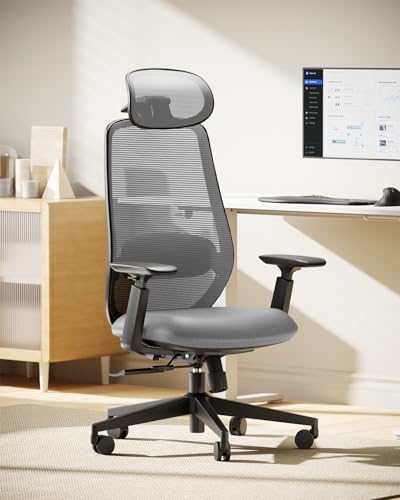
- Five-position sliding seat depth adjustment
- Adjustable lumbar and four-position recline
- Designed for users 5'4"–6'0" and under 220 pounds
Best For: Smaller workspaces and users within its specified fit range
Big-and-Tall Reclining Pick

- Dynamic multi-directional lumbar support
- 5D flip-up arms and extendable footrest
- BIFMA-certified frame supports up to 300 pounds
Best For: Work, gaming, and relaxation in one heavy-duty chair
High-Capacity Value Pick
ErgoSift M1 with 3.1-Inch Seat Depth

- 3.1 inches of adjustable seat depth
- 65D molded foam seat and adjustable lumbar
- 250-pound capacity with 135° recline
Best For: Users prioritizing seat-depth range and a padded seat
Best Value Foam Comfort
TRALT Adjustable Lumbar Office Chair

- 17.3-inch seat depth supports a practical thigh-to-knee fit.
- High-resilience molded foam seat with breathable mesh back.
- 330-pound capacity with BIFMA-certified gas lift.
Best For: Budget-focused users who prioritize seat cushioning and adjustable lumbar depth
Best Overall Adjustability
Marsail Sliding-Seat Mesh Chair

- 20- to 21.6-inch sliding seat depth adjustment.
- Six-level lumbar support with 3D headrest.
- 6D armrests and four-position recline.
Best For: Users seeking extensive ergonomic adjustment for long workdays
Flexible Mesh Support
MOLENTS Adjustable Ergonomic Chair

- Adjustable lumbar support and 3D armrests
- Breathable mesh with 90°–120° tilt
- Fixed 18.9-inch seat depth
Best For: Home and company workspaces needing adjustable back and arm support
Relaxation-Focused Support
MALOL Mesh Chair with Footrest

- Five-level lumbar and 3D headrest adjustment
- 90°–130° recline with retractable footrest
- Seat-depth adjustment is not listed
Best For: Work and relaxation setups prioritizing recline and leg support
Adaptive Lumbar Pick – Newtral MagicH003
The Newtral MagicH003 is a strong option if you want an ergonomic office chair with seat depth adjustment plus responsive lumbar support. Its sliding seat, adjustable back, headrest, armrests, and recline range make it suitable for tailoring the chair to different working and resting positions.
Best For: Users who prioritize adaptive lumbar tracking and extensive upper-body adjustments.
Pros:
- Automatic lumbar tracking follows movement and lets you adjust support strength.
- Seat depth, height, headrest, 3D armrests, and back height are adjustable.
- Reclines and locks from 96° to 126° with breathable mesh back support.
- Uses a BIFMA/SGS-certified Class 4 gas lift and supports up to 300 pounds.
Cons:
- The many adjustment options may require more setup time to dial in.
- The supplied dimensions are incomplete, making space planning more difficult.
Choose this model when dynamic lumbar movement and a broad adjustment range matter more than simplicity. It is especially appealing for long work sessions where back support needs may change throughout the day.
Compact Fit Choice – ProtoArc EC200
The ProtoArc EC200 is designed for shoppers seeking an ergonomic office chair with seat depth adjustment in a compact home-office setup. Its five-position sliding seat, adjustable lumbar support, headrest, and four recline locks are calibrated for users from 5’4″ to 6’0″ and under 220 pounds.
Best For: Remote workers and apartment dwellers who fit the stated height and weight range.
Pros:
- Five seat-depth positions provide 1.97 inches of travel for better thigh support.
- Lumbar support adjusts 2.36 inches vertically and 0.8 inches in depth.
- Four recline locks span 90°, 105°, 120°, and 130°, with adjustable tilt tension.
- High-density foam seat, mesh back, and a three-year manufacturer warranty.
Cons:
- The 220-pound maximum is lower than some competing chairs.
- The stated fit range may not suit users outside 5’4″–6’0″.
The EC200 stands out for making seat depth adjustment a central feature rather than an afterthought. Its defined fit range and space-conscious design make it a practical choice for smaller rooms and users within its recommended profile.
Big-and-Tall Reclining Pick – ELABEST X100 Mesh Chair
The ELABEST X100 targets shoppers who want a highly adjustable ergonomic office chair with seat depth adjustment, although the supplied notes emphasize its broader ergonomic system rather than specifying a seat-depth measurement. It combines dynamic lumbar support, extensive arm adjustments, a footrest, a headrest, and reclining functionality for work, gaming, and breaks.
Best For: Users who want a heavy-duty chair that transitions between focused work, gaming, and relaxation.
Pros:
- Dynamic lumbar system offers height, depth, rotation, and auto-tracking adjustments.
- 5D flip-up armrests adjust in multiple directions and tuck under desks.
- Three-stage reclining pairs with an 18-inch extendable footrest.
- BIFMA-certified structure supports up to 300 pounds and includes five-year satisfaction care.
Cons:
- The supplied notes do not state a specific seat-depth adjustment range.
- Its footrest and extensive adjustment system may be more than a basic office setup requires.
This is a versatile choice for buyers who value recline and recovery-oriented features alongside work support. Confirm the seat-depth specifications before purchase if that adjustment is your primary requirement.
High-Capacity Value Pick – ErgoSift M1 with 3.1-Inch Seat Depth
The ErgoSift M1 is a straightforward ergonomic office chair with seat depth adjustment, offering 3.1 inches of fore-and-aft seat movement to improve thigh support and knee clearance. It also includes a molded foam seat, adjustable lumbar support, 3D armrests, breathable mesh, and a recline range suited to work or short breaks.
Best For: Users who want substantial seat-depth travel and a higher stated weight capacity.
Pros:
- 3.1-inch seat-depth adjustment helps match the chair to leg length.
- 65D molded foam seat is designed to resist losing its supportive shape.
- Adjustable lumbar support, 3D armrests, and 90°–135° recline support varied tasks.
- Reinforced construction has a stated 250-pound maximum capacity.
Cons:
- The mid-back design does not include a headrest.
- The supplied details list a 250-pound maximum, so heavier users should look elsewhere.
The M1 is a practical pick when seat-depth range is the deciding factor. Its 3.1-inch adjustment and supportive foam seat offer useful fit customization without relying on a headrest or more elaborate reclining system.
Best Value Foam Comfort – TRALT Adjustable Lumbar Office Chair
If you want an ergonomic office chair with seat depth adjustment without stretching beyond a practical budget, the TRALT focuses on the essentials. Its 17.3-inch seat depth, adjustable lumbar support, breathable mesh back, and high-resilience molded foam seat are designed for comfortable desk work.
Best For: Budget-conscious home-office users who prefer a supportive foam seat and adjustable lumbar depth over a headrest.
Pros:
- 17.3-inch seat depth leaves room behind the knees for a more comfortable fit.
- Adjustable lumbar mechanism changes depth to better match your lower-back curve.
- High-resilience molded foam is designed to resist flattening, while the mesh back promotes airflow.
- Includes a BIFMA-certified gas cylinder, metal-core base, and 330-pound capacity.
Cons:
- Does not include a headrest.
- The listed seat depth is fixed rather than sliding through a range.
- The 17.7- to 21.7-inch seat-height range may not suit every desk or user.
The TRALT is a straightforward value option for shoppers who need reliable core adjustments and durable-feeling components. It is especially appealing if a well-padded seat and breathable back matter more to you than extensive armrest or recline customization.
Best Overall Adjustability – Marsail Sliding-Seat Mesh Chair
The Marsail is a strong pick if you need an ergonomic office chair with seat depth adjustment that can adapt to different body sizes and working positions. Its seat slides from 20 to 21.6 inches, while six-level lumbar support, a 3D headrest, 6D armrests, and four recline locks expand the fit options.
Best For: Remote workers, students, and computer users who want extensive adjustment across the seat, back, headrest, and armrests.
Pros:
- Sliding seat depth adjusts from 20 to 21.6 inches for customized thigh support.
- Six-level lumbar support and a 3D headrest provide multiple points of adjustment.
- 6D armrests can move in multiple directions for typing, calls, drawing, or reclining.
- Four-position recline locks at 90, 99, 109, and 121 degrees.
Cons:
- The many adjustment points may take time to dial in.
- The mesh seat may feel less plush than a thick foam cushion.
- The supplied notes do not list a maximum weight capacity.
With the broadest adjustment package of the three chairs, this Marsail model is suited to users who frequently change tasks or share a workspace. Its sliding seat is the key feature for dialing in leg support rather than accepting a one-size-fits-all depth.
Best Heavy-Duty Pick – Marsail Big and Tall Sliding-Seat Chair
For shoppers who want an ergonomic office chair with seat depth adjustment and a higher stated weight rating, this Marsail model combines a sliding seat with a 330-pound capacity. It also adds 6D armrests, a 3D headrest, targeted lumbar support, breathable mesh, and four-position tilt locking for work and breaks.
Best For: Big-and-tall users and anyone who wants a 330-pound-rated chair with adjustable seat depth for office or gaming use.
Pros:
- Adjustable seat depth helps support the thighs and reduce back strain.
- 330-pound maximum weight recommendation suits a wide range of users.
- 6D armrests and 3D headrest offer flexible positioning for work or gaming.
- Rubber casters are designed for quiet movement and reduced hair tangling.
Cons:
- The supplied notes do not specify the seat-depth adjustment range.
- Its larger, high-back design may be more chair than compact workspaces need.
- Assembly is required.
This is the most compelling option when capacity and full-body adjustability are priorities. The five-year warranty adds reassurance, while the slide seat and 4-position tilt lock make it flexible for focused work, reading, gaming, and short rest periods.
Flexible Mesh Support – MOLENTS Adjustable Ergonomic Chair
If you want an ergonomic office chair with seat depth adjustment, note that this MOLENTS model has a fixed 18.9-inch seat depth rather than a sliding seat. It focuses instead on customizable lumbar support, 3D armrests, breathable mesh, and a 90°–120° tilt range for everyday work.
Best For: Home and company workspaces where adjustable back and arm support matter more than adjustable seat depth.
Pros:
- Lumbar support adjusts up/down and forward/backward.
- 3D armrests offer customizable arm and shoulder support.
- Breathable, high-elastic mesh helps reduce stuffiness.
- Three reclining positions support upright work and breaks.
Cons:
- The 18.9-inch seat depth is not adjustable.
- Assembly requires locating the base leg packaged inside the seat component.
This is a practical choice for users who can work with its fixed seat dimensions and want broad ergonomic adjustability elsewhere. Contact from the manufacturer may be needed if you require a different gas-lift height.
Best Seat-Depth Fit – MALOL 400-Lb Ergonomic Chair
This MALOL is a strong match for shoppers specifically seeking an ergonomic office chair with seat depth adjustment. Its seat slides 5 cm to better match leg length, while dynamic lumbar support, a height-adjustable backrest, and extensive armrest adjustments help personalize a long-workday setup.
Best For: Users who prioritize adjustable seat fit, higher weight capacity, and full-body support for work, gaming, or study.
Pros:
- 5 cm sliding seat-depth adjustment helps reduce thigh pressure.
- Supports up to 400 pounds with an aluminum base and SGS-certified gas lift.
- 6D armrests provide height, slide, rotation, flip-up, and recline-linked adjustments.
- Includes a 3D headrest, dynamic lumbar support, footrest, and coat hanger.
Cons:
- At 46 pounds, it is relatively substantial to move.
- Its many adjustment features may require more setup time to personalize.
Among these options, this is the clearest fit for anyone who needs seat-depth adjustment rather than a fixed seat pan. The combination of a 400-pound capacity, 5cm sliding seat, and three-position recline makes it especially versatile.
Relaxation-Focused Support – MALOL Mesh Chair with Footrest
This MALOL chair combines a reclining design with a retractable footrest, adjustable lumbar support, and a 3D headrest. However, shoppers searching for an ergonomic office chair with seat depth adjustment should note that the supplied details do not identify a sliding seat-depth feature.
Best For: Work, reading, gaming, and study setups where reclining comfort and leg support are priorities.
Pros:
- Five lumbar height settings support different body types.
- 3D headrest adjusts for neck and shoulder support.
- Breathable mesh promotes airflow during extended sitting.
- Reclines from 90° to 130° and includes a retractable footrest.
Cons:
- Seat-depth adjustment is not listed in the supplied specifications.
- Its 300-pound capacity is lower than the other MALOL model in this roundup.
This is better suited to buyers who want a chair that transitions from focused work to relaxation. If matching seat depth to leg length is essential, verify that feature before choosing this model.
How We Picked the Best Ergonomic Office Chair with Seat Depth Adjustment
We focused on chairs that provide genuine seat-depth adjustment or a sliding seat pan, then compared the other features that affect long-session comfort. These include lumbar-support adjustability, armrest range, headrest positioning, recline behavior, seat width, weight capacity, mesh construction, and available footrests. We also considered whether each design suits a compact desk, a larger workstation, or a shared home office.
Feature counts alone do not determine comfort. Adjustment range, stability, padding, and how easily controls can be reached matter just as much. Specifications and certifications should be checked against the manufacturer’s current listing before purchase.
Quick Comparison
| Chair type | Best suited for | Features to prioritize |
|---|---|---|
| Compact adjustable-seat models | Smaller desks and average-height users | Seat-depth range, lumbar fit, armrest clearance |
| High-back and headrest chairs | Reclining, reading, and long work sessions | Headrest range, recline lock, back support |
| Big-and-tall models | Larger users and wider workstations | Weight rating, seat width, sturdy base |
| Footrest-equipped chairs | Breaks, reclining, and occasional relaxation | Footrest strength, recline stability, clearance |
Key Buying Factors for an Ergonomic Office Chair with Seat Depth Adjustment
Seat Depth and Body Fit
When seated with your back against the backrest, aim for roughly two to three fingers of space between the seat edge and the backs of your knees. The adjustment should support most of your thighs without restricting circulation. Check the stated range, not just whether the product description says “adjustable.”
Lumbar and Upper-Body Support
Look for lumbar support that can move vertically, in depth, or in firmness. A height-adjustable headrest can help taller users, while shorter users may prefer a chair without a headrest that pushes the head forward. Recline tension and lock positions also influence posture during changing tasks.
Armrests, Materials, and Durability
Adjustable arms should let your shoulders remain relaxed while your elbows stay near your sides. Mesh can improve airflow, but seat padding and frame construction affect long-term comfort. For heavier users, verify the tested weight capacity, base construction, caster quality, and any BIFMA certification claims.
Who Should Buy Which Ergonomic Office Chair with Seat Depth Adjustment?
Choose a compact model if desk space is limited or you need a straightforward chair with useful seat-depth control. Pick a high-back option with a headrest if you frequently recline or want more upper-back support. Big-and-tall shoppers should prioritize capacity, seat width, and structural stability over a long list of minor adjustments. A footrest model makes sense for users who recline during breaks, but it should not replace proper desk-height setup.
Before ordering, measure your desk clearance, compare the chair’s seat height with your desk, and review the return policy. Seat-depth adjustment improves fit, but the best result comes from matching the entire adjustment range to your height, posture, and daily routine.