Long programming sessions demand more than a soft seat. The right ergonomic office chair can support your lower back, keep your posture balanced, and make it easier to stay focused through hours of coding.
These 10 options cover a range of needs, including adjustable lumbar support, breathable mesh, wide seats, footrests, headrests, and heavy-duty weight capacities. Use the guide below to narrow the list by fit, adjustability, materials, and workspace requirements.
Best 10 Ergonomic Office Chair for Programmers Picks for 2026
Best Adjustable Fit
ProtoArc EC200 Ergonomic Office Chair
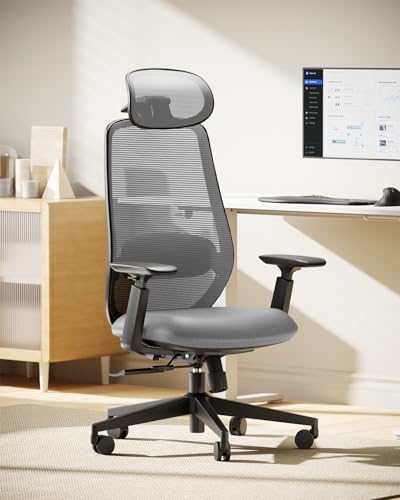
- Five-position sliding seat depth
- Adjustable lumbar and 3D headrest
- Four recline locks and three-year warranty
Best For: Programmers seeking fine-tuned ergonomic fit
Best Big-and-Tall Comfort
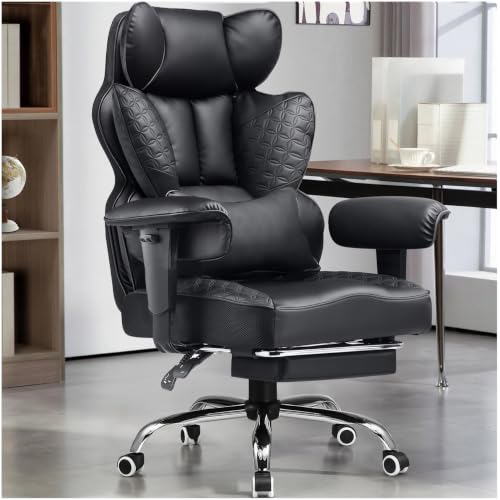
- 400-pound heavy-duty capacity
- Spring lumbar and triple-pad cushion
- 90–135° recline with footrest
Best For: Bigger and taller programmers needing a wide seat
Best Space-Saving Upholstered Chair

- Pocket-spring pressure-relief cushion
- Flip-up armrests clear desk space
- Quiet casters and 300-pound capacity
Best For: Compact home offices needing padded support
Best Relaxation Features
COLAMY Massage & Heat Office Chair

- 400-pound BIFMA-tested construction
- Adjustable massage and lumbar heat
- 100–140° recline with footrest
Best For: Programmers wanting work and relaxation functions
Best Overall

- Independent dual lumbar adjustment
- 4.3-inch thick, roomy foam seat
- 350-pound capacity with lifetime warranty
Best For: Programmers wanting substantial cushioning and personalized back support
Best Budget Pick

- Ventilated mesh back for airflow
- Adjustable height and lumbar support
- BIFMA-standard components, 250-pound capacity
Best For: Budget-minded programmers needing basic daily desk support
Best Premium Comfort

- Dynamic 3D lumbar and 5D arms
- Recline with extendable footrest
- Breathable mesh and 300-pound capacity
Best For: Programmers wanting maximum adjustability for work and relaxation
Flexible Comfort Pick
Mimoglad High-Back Ergonomic Chair
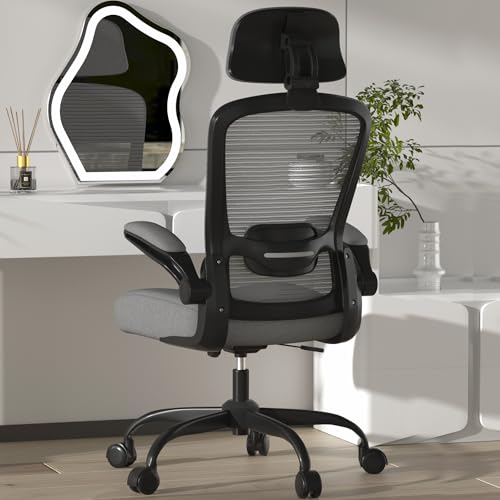
- Adjustable lumbar support, headrest, height, and recline
- Breathable mesh with flip-up armrests
- 300-pound capacity and five-year warranty
Best For: Multipurpose workspaces needing flexible support
Durable Budget Choice

- Resilient molded-foam seat and adjustable lumbar
- Breathable mesh back with no faux-leather peeling
- 330-pound capacity, BIFMA gas lift, and two-year warranty
Best For: Budget-conscious programmers prioritizing core durability
Light-Finish Alternative
TRALT White-and-Black Mesh Chair
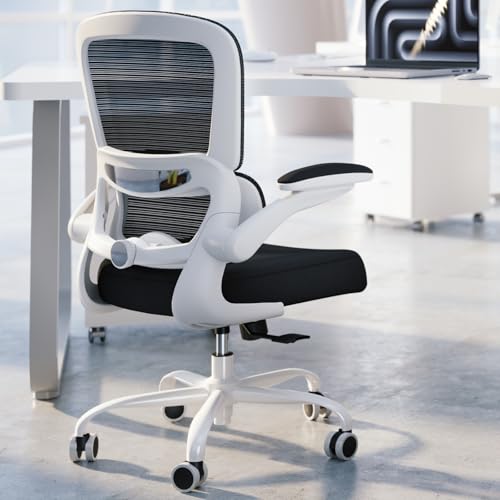
- Depth-adjustable lumbar and resilient molded-foam seat
- Breathable mesh back with silent casters
- 330-pound capacity and two-year warranty
Best For: Bright home offices needing practical daily support
Best Adjustable Fit – ProtoArc EC200 Ergonomic Office Chair
For programmers who spend 8 or more hours at a desk, the ProtoArc EC200 is an ergonomic office chair for programmers focused on fit and posture. Its independently adjustable seat depth, lumbar support, mesh back, and 3D headrest help you set up a more personalized working position.
Best For: Users 5’4″ to 6’0″ and under 220 pounds who want detailed seat and lumbar adjustments for long coding sessions.
Pros:
- Five-position seat-depth adjustment with 1.97 inches of travel helps support different leg lengths.
- Lumbar support adjusts by 2.36 inches in height and 0.8 inches in depth.
- Four recline lock positions, tension control, and a 55D foam cushion support varied workday positions.
- Includes a three-year warranty and is designed for relatively quick assembly.
Cons:
- The recommended user range excludes users over 220 pounds or outside the stated height range.
- The chair is intended for indoor use and hard floors.
The EC200 stands out when precise ergonomic adjustment matters more than oversized proportions. Its five-position seat-depth slider is particularly useful for programmers who want full thigh support without losing contact with the lumbar area.
Best Big-and-Tall Comfort – GTPLAYER 400lb Office Chair
The GTPLAYER Big and Tall chair is an ergonomic office chair for programmers who need a wider seat, reinforced construction, and extra cushioning. Its spring-supported lumbar area, enlarged headrest, and 400-pound capacity are aimed at extended computer and gaming use.
Best For: Bigger and taller users who want a broad, cushioned chair for programming, gaming, and reclining.
Pros:
- 400-pound recommended capacity with a heavy-duty metal base and frame.
- Spring lumbar support and a triple-pad seat cushion help distribute pressure.
- Reclines from 90 to 135 degrees and includes a footrest for relaxation.
- Easy-clean faux leather upholstery is described as scratch-resistant and pet-friendly.
Cons:
- Faux leather may feel less breathable than mesh during long sessions.
- Its large, high-back design may be less suitable for compact workspaces.
- The warranty is one year.
If standard office chairs feel narrow or under-supported, this GTPLAYER model offers a more substantial seating platform. It prioritizes capacity, cushioning, and recline flexibility over the lighter feel of a mesh task chair.
Best Space-Saving Upholstered Chair – GTPOFFICE Executive Chair
The GTPOFFICE Executive chair is an ergonomic office chair for programmers who want padded support and practical desk clearance. Its pocket-spring cushion, built-in lumbar support, quiet upgraded casters, and flip-up arms suit everyday computer work in a compact home office.
Best For: Programmers who prefer an upholstered mid-back chair that can slide under the desk when not in use.
Pros:
- Zone-based pocket-spring cushioning and high-density foam help distribute sitting pressure.
- Flip-up padded armrests make it easier to store under a desk.
- Upgraded casters are designed for quieter movement on hardwood, tile, and carpet.
- Supports up to 300 pounds and includes a one-year warranty.
Cons:
- The mid-back design provides less upper-back coverage than a high-back chair.
- PU leather may feel warmer than a mesh chair during extended sessions.
- Its supplied notes do not specify an adjustable seat depth or headrest.
This model is a sensible choice when desk clearance and padded comfort are priorities. The flip-up arms and compact mid-back profile are especially useful for smaller work areas, while the spring cushion adds support for daily coding.
Best Relaxation Features – COLAMY Massage & Heat Office Chair
The COLAMY Big and Tall chair is an ergonomic office chair for programmers who want work-to-relaxation features in one seat. It combines a 400-pound BIFMA-tested frame with adjustable lumbar massage, heat, a 100-to-140-degree recline, and an extendable footrest.
Best For: Users who want a heavy-duty programming chair that also supports breaks, reclining, massage, and lumbar heat.
Pros:
- 400-pound capacity with a reinforced steel frame and BIFMA X5.1 testing.
- Massage offers three modes and three intensity levels.
- Lumbar heat provides three levels and includes an automatic shutoff timer.
- Reclines from 100 to 140 degrees and includes an extendable padded footrest.
Cons:
- The 30.31-inch width and 27.56-inch depth require substantial floor space.
- Massage and heat add complexity compared with a conventional task chair.
- The supplied notes do not list adjustable seat depth or detailed lumbar-position controls.
Choose the COLAMY when relaxation features are as important as desk support. Its heavy-duty construction and broad recline range suit long workdays followed by reading, gaming, or recovery breaks, though its larger footprint needs planning.
Best Overall – Thick-Seat Dual-Lumbar Chair
For shoppers seeking an ergonomic office chair for programmers, this model combines independently adjustable dual lumbar support with a thick, roomy seat. Its breathable high-back mesh, adjustable headrest, recline, and 350-pound capacity make it suited to long coding sessions and varied home-office setups.
Best For: Programmers who want substantial cushioning, personalized lower-back support, and a higher weight capacity.
Pros:
- Independent dual lumbar zones with forward/back adjustment offer more targeted support than a fixed pad.
- Extra-thick 4.3-inch foam seat and roomy 20.1-by-20.5-inch cushion support extended sitting.
- High-back breathable mesh, 3D headrest, flip-up arms, 125-degree recline, and 350-pound capacity add versatility.
- Lifetime warranty and included assembly guidance provide useful long-term support.
Cons:
- The chair has a larger feature set and footprint than a basic desk chair.
- Its stated seat-height range is 17.7 to 21.7 inches, so users should confirm desk and leg-height compatibility.
This is the strongest all-around option when seat cushioning and adjustable lumbar support matter more than keeping the chair especially compact. It also works well for reading, gaming, meetings, and reclining between tasks.
Best Budget Pick – Compact Mid-Back Mesh Chair
This mid-back model is a practical ergonomic office chair for programmers who need basic support without a larger executive-style design. Its ventilated mesh back, lumbar support, adjustable height, and rolling base cover the essentials for everyday home-office work.
Best For: Budget-conscious programmers who prefer a compact, straightforward chair for daily desk use.
Pros:
- Ventilated mesh back promotes airflow during long periods of sitting.
- Curved mid-back design, lumbar support, ergonomic armrests, and a high-density cushion provide everyday comfort.
- Seat height adjusts from 17.1 to 20.3 inches, with swivel movement and rolling wheels.
- BIFMA-standard components and a listed 250-pound capacity support dependable routine use.
Cons:
- Mid-back design provides less upper-back and neck coverage than a high-back chair.
- The product notes describe only one reclining position and two height positions, limiting fine adjustment.
- Its 250-pound capacity is lower than the other chairs in this roundup.
Choose this chair when simplicity, airflow, and a smaller office footprint are priorities. It offers the core adjustments many programmers need, but users seeking extensive posture customization may prefer a higher-end model.
Best Premium Comfort – X100 Footrest Mesh Chair
The ELABEST X100 is an ergonomic office chair for programmers who want extensive adjustment and the ability to shift between focused work and relaxation. Its dynamic lumbar system, 5D flip-up arms, reclining mechanism, headrest, and extendable footrest support long desk sessions as well as breaks.
Best For: Programmers who want a highly adjustable chair with leg support for work, gaming, and reclining.
Pros:
- 3D synchro-tilt lumbar support adjusts in depth, height, and rotation to follow movement.
- 5D flip-up armrests provide extensive positioning and tuck under a desk when needed.
- Three-stage recline, 18-inch extendable footrest, and adjustable 3D headrest support work and relaxation.
- Breathable Dual-Stripe AirMesh, BIFMA-certified construction, and 300-pound capacity suit extended use.
Cons:
- The extensive adjustment system may take longer to dial in than a simpler office chair.
- The built-in footrest and larger feature set may require more space than a basic desk chair.
- Its 18.3 to 23-inch seat-height range should be checked against the user’s desk and preferred posture.
This is the premium choice for users who value movement, adjustability, and a work-to-rest setup in one chair. The footrest and reclining system are especially useful for programmers who alternate between intensive coding and recovery breaks.
Flexible Comfort Pick – Mimoglad High-Back Ergonomic Chair
For programmers who alternate between focused coding and short breaks, this ergonomic office chair for programmers combines adjustable lumbar support, a headrest, breathable mesh, and a rocking function. Its flip-up arms also make it easier to change positions or clear space around your desk.
Best For: Programmers who want broad adjustability, head and neck support, and flexible armrests for a multipurpose workspace.
Pros:
- Adjustable lumbar support, headrest, seat height, and recline help personalize the fit.
- Breathable mesh promotes airflow during extended sitting sessions.
- Flip-up armrests work well for compact desks, guitar playing, or other activities.
- Reinforced construction supports up to 300 pounds and includes a five-year warranty.
Cons:
- Assembly is required.
- The chair weighs 25 pounds and has a relatively substantial footprint.
- Its many adjustment features may take some initial setup to dial in.
This Mimoglad is a versatile option when you want more than a basic task chair. Choose it for the headrest, flip-up arms, and rocking motion, especially if your programming setup doubles as a gaming, music, or creative space.
Durable Budget Choice – TRALT Black Mesh Office Chair
This TRALT chair focuses its budget on the features programmers use most: adjustable lumbar support, a resilient seat, a breathable mesh back, and dependable height adjustment. The 17.7- to 21.7-inch seat-height range is designed for users approximately 5’4″ to 6’2″.
Best For: Programmers seeking a practical, breathable chair with durable core components and a relatively straightforward setup.
Pros:
- High-resilience molded foam is designed to retain its cushioning over time.
- Adjustable lumbar support lets you change the depth to better match your spine.
- Class 3 BIFMA-certified gas lift and a metal-core base support durability.
- Wide 19.7-inch seat, silent casters, 330-pound capacity, and a two-year warranty.
Cons:
- It does not include a headrest.
- Assembly is required, although the instructions describe a 15-minute process.
- The listed fit range may not suit users outside approximately 5’4″ to 6’2″.
With no headrest to pay for, the TRALT puts emphasis on seating durability and lumbar adjustment. It is a sensible ergonomic office chair for programmers who want all-day support essentials without adding features they may not use.
Light-Finish Alternative – TRALT White-and-Black Mesh Chair
The white-and-black TRALT offers the same programming-friendly fundamentals as the black version: adjustable lumbar support, a molded-foam seat, breathable mesh, and a stable height range. Its lighter finish is a useful choice when you want an ergonomic office chair for programmers that visually brightens a home-office setup.
Best For: Programmers who want a lighter chair color while keeping a supportive, breathable design for daily desk work.
Pros:
- Depth-adjustable lumbar support is designed to reduce lower-back pressure.
- High-resilience molded foam helps the seat retain its shape.
- Breathable mesh back improves airflow and avoids peeling faux leather.
- 330-pound capacity, silent casters, BIFMA-certified gas lift, and two-year warranty.
Cons:
- It does not include a headrest.
- The white-and-black finish may require more care to keep looking clean.
- Assembly is required.
This version is functionally oriented but visually distinct. Consider it when your workspace benefits from a lighter color scheme and you want the TRALT design’s lumbar adjustment, mesh airflow, and reinforced base.
How We Picked the Best Ergonomic Office Chair for Programmers
We focused on features that matter during long, mostly seated work sessions: lumbar support, seat adjustability, armrest positioning, backrest design, cushioning, stability, and overall fit. We also considered practical differences between mesh, fabric, PU leather, and gaming-style designs, along with features such as footrests, headrests, massage functions, and higher weight capacities.
Because comfort is highly personal, no single chair is ideal for every programmer. A chair should let you place your feet flat on the floor, keep your elbows near desk height, and support a neutral posture without forcing you into one position.
Quick Comparison
- Best for breathable support: Mesh chairs with adjustable lumbar systems, such as the ELABEST and TRALT designs.
- Best for larger users: Big-and-tall models from GTPLAYER, COLAMY, and ELABEST with wider seats and stronger weight ratings.
- Best for compact or flexible spaces: Mid-back and flip-up-arm chairs that can slide under a desk or accommodate instruments and limited room.
- Best for a cushioned executive feel: PU leather and thick-seat models from GTPOFFICE, COLAMY, and BestOffice.
- Best for leg support: Models with integrated footrests, particularly useful for occasional reclining or breaks.
Key Buying Factors for an Ergonomic Office Chair for Programmers
Adjustability
Prioritize seat height, seat depth, recline tension, and armrest adjustment. Seat depth is especially important: your back should contact the backrest while leaving a small gap between the seat edge and the backs of your knees. Adjustable or multidirectional armrests can reduce shoulder strain when typing.
Lumbar and Back Support
Look for lumbar support that matches the curve of your lower back and can be moved or adjusted rather than relying only on a fixed cushion. Mesh backs may feel cooler, while padded or high-back designs can provide a more enveloping feel.
Seat Size and Weight Capacity
Choose a seat wide enough to shift positions without pressing against the side bolsters. Big-and-tall chairs are worth considering if you need extra width, a higher back, or a greater tested weight capacity. Avoid choosing solely by the advertised maximum; the chair should also fit your proportions.
Materials and Extras
Mesh is often preferable in warm rooms, while PU leather is easier to wipe clean but may retain more heat. Headrests, footrests, massage, and heat can be useful preferences, but they should not outweigh core ergonomic adjustments or build stability.
Who Should Buy Which Ergonomic Office Chair for Programmers?
Choose a highly adjustable mesh chair if you code for many hours and tend to work warm. Pick a wide, heavy-duty model if standard office chairs feel restrictive. A cushioned executive chair suits users who prefer a softer, more substantial seat, while a compact flip-up-arm design works well in multipurpose rooms. If you regularly recline to read, think, or take calls, a footrest can add comfort, but it is not a substitute for correct desk height and lumbar support.
Before buying, measure your desk clearance, available floor space, and preferred seat height. A properly adjusted chair paired with a monitor at a comfortable viewing level will do more for sustained comfort than any single extra feature.