The best drafting tables for home offices make it easier to switch between focused computer work, drawing, crafting, and detailed hands-on projects. The right model should provide a stable work surface, comfortable tilt adjustment, and storage that fits your routine.
We compared these 10 selected tables by adjustability, workspace, organization, portability, and overall practicality so you can choose a setup that suits your space and creative workload.
Best 10 Drafting Tables for Home Offices Picks for 2026
Best Storage Pick
Tribesigns Tilting Drafting Desk
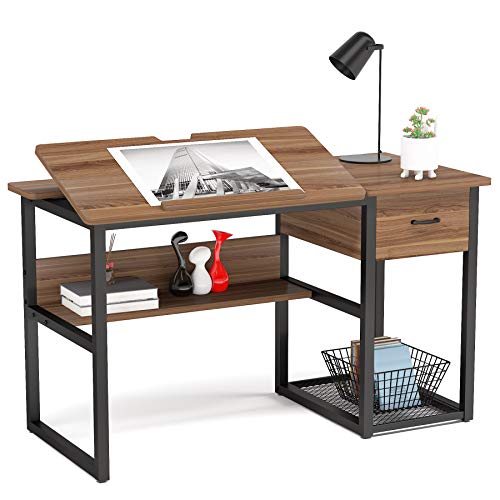
- 47.2-inch-wide work surface
- 12 tilt positions from 0 to 80 degrees
- Drawer plus open and bottom shelves
Best For: Home offices needing storage and a versatile drafting surface
Best Solid-Wood Style
Studio Designs Vintage Drafting Table

- Solid-wood rustic oak construction
- Five surface positions up to 90 degrees
- Built-in pencil groove and ledge
Best For: Traditional home offices and art spaces
Best With Stool

- Matching 20-inch-high stool included
- 0-to-65-degree tilting tabletop
- Two drawers, shelf, and pencil organizer
Best For: Compact creative workspaces needing a complete desk-and-seat setup
Best Monitor Setup

- Removable 4.3-inch monitor riser
- Desktop tilts up to 45 degrees
- Drawer plus two side shelves
Best For: Hybrid home offices combining computer and drafting work
Mobile Glass Workstation

- 0–70° tilting tempered-glass top
- Four lockable wheels for mobility
- Two drawers and under-desk trays
Best For: Portable home-office art and drafting setups
Height-Adjustable Studio Desk
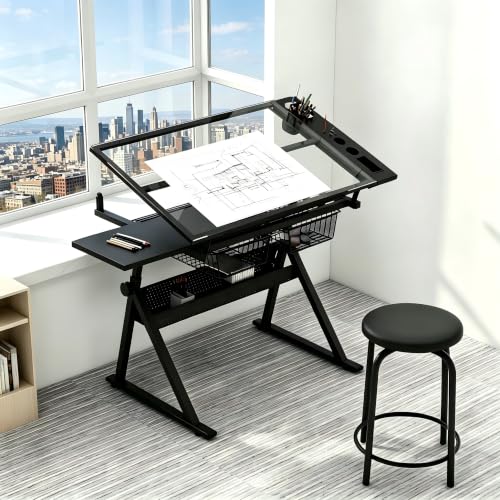
- 31.5–49.5-inch adjustable height
- 0–75° tilting glass tabletop
- Includes stool and supply storage
Best For: Flexible seated or standing creative work
Storage-Focused Craft Station
Adjustable Drafting Table with Cabinet

- 0–80° adjustable tabletop
- Three drawers, shelves, and cabinet
- 47.2-inch-wide engineered-wood design
Best For: Organized home offices and craft rooms
Best All-in-One Pick
White Adjustable Drafting Table with Stool

- 0°–75° tilt and adjustable height
- Matching 330-pound-capacity stool included
- Two drawers, shelf, and side storage strips
Best For: Multipurpose home offices and creative workspaces
Best Rustic Storage Setup
Garvee Adjustable Drafting Table

- 0°–75° tilting tabletop
- Two drawers plus shelf and accessory storage
- Adjustable legs and included stool
Best For: Organized art-and-office workstations
Best Expanded Work Surface

- Adjustable height and tilting tabletop
- Extended surface plus pencil ledge
- Two drawers and matching stool included
Best For: Craft rooms and spacious home-office work areas
Best Storage Pick – Tribesigns Tilting Drafting Desk
For home offices that need both a generous work surface and organized storage, this Tribesigns model is one of the more versatile drafting tables for home offices. Its tabletop tilts through 12 positions from flat to 80 degrees, while the drawer, open shelf, and bottom shelf help keep supplies nearby.
Best For: Home-office users who need a multifunctional desk for drafting, computing, studying, and crafts.
Pros:
- Large 47.2-inch-wide desktop with a tilting section.
- Includes a drawer, open shelf, and bottom shelf for supplies.
- Metal frame and 0.6-inch particleboard construction support up to 250 pounds on the desktop.
- Adjusts from 0 to 80 degrees across 12 positions.
Cons:
- Assembly is recommended for two people.
- The tabletop uses engineered particleboard rather than solid wood.
This is a strong all-purpose choice when storage and stability matter as much as drawing-angle adjustment. Its broad surface can support office work alongside creative projects, although its larger footprint may require careful placement in a compact room.
Best Solid-Wood Style – Studio Designs Vintage Drafting Table
With its rustic oak finish and solid-wood construction, this Studio Designs table brings a traditional look to drafting tables for home offices. The 42-by-30-inch work surface adjusts from flat through several angles up to 90 degrees, making it suitable for drawing, painting, writing, and sketching.
Best For: Buyers who prioritize classic furniture styling, solid wood, and a highly adjustable art surface.
Pros:
- Solid-wood frame with a vintage, antique-inspired appearance.
- Work surface adjusts to flat, 23, 46, 70, and 90 degrees.
- Built-in 24-inch pencil groove and ledge keep tools within reach.
- Four floor levelers help compensate for uneven floors.
Cons:
- The stand itself is not height adjustable.
- Maximum recommended load is 50 pounds.
- No drawer is included for enclosed storage.
This table is a good fit for a dedicated art or writing area where appearance matters. The angle range is excellent for creative work, but the lack of height adjustment and enclosed storage makes it less adaptable as a full computer workstation.
Best With Stool – VECELO Adjustable Art Desk
If you want a coordinated seat included, the VECELO combines an adjustable drafting surface with a matching stool. Among drafting tables for home offices, it stands out for its compact 40.2-inch width, two fabric drawers, lower storage shelf, pencil organizer, and tabletop that tilts from 0 to 65 degrees.
Best For: Artists, students, and home-office users who want a drafting table and stool in one package.
Pros:
- Includes a matching 20-inch-high stool with a cushioned PU seat.
- Tabletop adjusts from flat to 65 degrees.
- Two drawers, a lower fabric shelf, and pencil slots provide accessible storage.
- Metal frame and triangular leg design are paired with protective foot pads.
Cons:
- Tabletop capacity is limited to 55 pounds.
- The engineered-wood surface is 12 millimeters thick.
- Its 40.2-inch width offers less workspace than some larger models.
This is a practical starter setup for creative work in a bedroom, study, or smaller office. The included stool adds value and convenience, while the lighter weight capacity makes it better suited to drawing and writing than heavy desktop equipment.
Best Monitor Setup – X-cosrack Tilting Desk
The X-cosrack is designed for users who want a drafting surface that can also support computer work. It combines a 43.3-inch workstation with a removable 4.3-inch monitor riser, adjustable desktop up to 45 degrees, a drawer, and two side shelves—useful features when comparing drafting tables for home offices.
Best For: Home-office users who alternate between computer work, drawing, studying, and writing.
Pros:
- Tilting desktop adjusts from flat to 45 degrees.
- Removable monitor stand can raise the screen by 4.3 inches.
- Includes a drawer and two shelves for office supplies and equipment.
- Metal frame, cross structure, and adjustable feet are designed for stability.
Cons:
- The maximum tilt angle is lower than some art-focused tables.
- The listed dimensions are 43.3 inches deep by 21.6 inches wide, so room placement should be measured carefully.
- Storage includes a single drawer despite some specifications listing two drawers.
This model makes the most sense for a hybrid office where a monitor and creative materials share one station. Its removable riser adds flexibility, while the moderate 45-degree tilt is better for mixed-use work than for highly angled illustration.
Mobile Glass Workstation – Adjustable Drafting Table
For home offices that double as creative spaces, this adjustable drafting table combines a transparent tempered-glass surface with a sturdy steel frame. The tabletop tilts from 0 to 70 degrees, while lockable wheels and built-in storage make it practical for moving between projects.
Best For: Artists, students, and home-office users who want a portable drafting and crafting surface.
Pros:
- Adjustable 0–70-degree glass tabletop supports drawing, painting, reading, and writing.
- Four silent lockable wheels make the desk easy to reposition and stabilize.
- Two fabric drawers, under-desk trays, and slide-up pencil ledges help organize supplies.
- Wipe-clean glass surface and powder-coated steel frame suit frequent creative use.
Cons:
- The glass top may not appeal to shoppers who prefer a traditional opaque work surface.
- The 40.55-inch width and rolling base require adequate floor space.
This is a flexible choice among drafting tables for home offices, especially when mobility, easy cleanup, and an adjustable drawing angle matter more than a large fixed storage system.
Height-Adjustable Studio Desk – Drafting Table with Stool
This height-adjustable drafting table is designed for home offices where one surface needs to support both seated and standing creative work. Its tabletop tilts from 0 to 75 degrees and adjusts from 31.5 to 49.5 inches, with a glass top, storage compartments, and an included stool.
Best For: Creatives who want a taller, more adjustable workstation with a matching seat.
Pros:
- Height adjustment from 31.5 to 49.5 inches accommodates different working positions.
- 0–75-degree tilt and automatic rotation support drawing, crafting, and computer work.
- Includes a stool with steel legs for a coordinated seating option.
- Multiple trays, hanging drawers, and a 24-inch pencil ledge keep supplies accessible.
Cons:
- At 56.9 pounds, it is less convenient to move than a lightweight desk.
- The glass surface and multiple adjustable features may require more setup than a basic office table.
Among drafting tables for home offices, this model stands out for its broad height range and included stool. It is a strong fit when ergonomic flexibility and creative storage are priorities.
Storage-Focused Craft Station – Adjustable Drafting Table with Cabinet
For home offices that need substantial organization, this adjustable drafting table pairs a 0–80-degree tabletop with three drawers, three-tier open shelving, and a storage cabinet. Its 47.2-inch-wide engineered-wood design works as a writing, reading, crafting, computer, or art workstation.
Best For: Home-office users and crafters who need extensive built-in storage for supplies and paperwork.
Pros:
- Tabletop adjusts from flat to an 80-degree angle for everyday work and creative projects.
- Three drawers, open shelves, and a cabinet provide considerably more storage than a minimalist desk.
- Wide 47.2-inch surface supports drafting, painting, writing, and computer tasks.
- Engineered-wood construction is designed for a stable, wobble-free work surface.
Cons:
- At 82 pounds, this is a substantial piece that may be difficult to reposition.
- Its built-in storage footprint requires more room than a compact drafting table.
- The tabletop height is listed at 29.9 inches and is not height adjustable.
This is one of the more storage-oriented drafting tables for home offices. Choose it if keeping art materials, office supplies, and reference items organized is more important than portability or adjustable desk height.
Best All-in-One Pick – White Adjustable Drafting Table with Stool
For shoppers comparing drafting tables for home offices, this white model combines a height- and angle-adjustable work surface with built-in storage and a matching stool. Its flat position supports laptop or writing tasks, while the tilt function accommodates drawing and other creative work.
Best For: Home offices that double as art or hobby spaces, especially where a coordinated stool and compact storage are useful.
Pros:
- Desktop tilts from 0° to 75° and height adjusts from 26.77 to 35.82 inches.
- Includes a matching stool rated to support up to 330 pounds.
- Two drawers, an open shelf, and side metal strips help organize supplies.
- 35.58-by-23.62-inch desktop fits canvases, sketchbooks, or a laptop.
Cons:
- The fabric drawers have a 6.6-pound capacity each.
- Its single-seat design may not suit shared workstations.
This is a versatile choice when one desk needs to handle office work and creative projects. The adjustable height, broad tilt range, stool, and storage make it especially practical for multipurpose rooms and compact home-office corners.
Best Rustic Storage Setup – Garvee Adjustable Drafting Table
The Garvee is a strong option among drafting tables for home offices when organization is a priority. Its rustic-brown tabletop adjusts from flat to a 75° angle, while two drawers, a bottom shelf, a retractable board, and side storage provide dedicated places for office and art supplies.
Best For: Artists, students, and home-office users who want extensive built-in organization alongside an adjustable work surface.
Pros:
- Height adjusts from 26.77 to 35.82 inches, and the tabletop tilts from 0° to 75°.
- Steel-and-wood construction includes adjustable legs for stability on uneven surfaces.
- Storage includes two drawers, a bottom shelf, retractable document board, and side tray.
- Included stool supports up to 330 pounds.
Cons:
- Each non-woven drawer is rated for up to 6.6 pounds.
- The rustic-brown and black finish may not match every office style.
Choose this model if you want a drafting desk that keeps frequently used tools and documents close at hand. Its wide adjustment range also lets it transition from angled drawing to flat laptop or office work.
Best Expanded Work Surface – Natural Craft Drafting Desk
This natural-finish craft desk is worth considering when drafting tables for home offices need extra working room. It combines a height-adjustable main surface with a tilting tabletop, an additional flat area, an extended work surface, and a slide-up pencil ledge for drawing, writing, and study tasks.
Best For: Home offices, craft rooms, and family work areas where a larger multi-surface setup and included stool are helpful.
Pros:
- Tilting work surface adjusts up to 45° according to the product description.
- Includes a 23.6-by-15-inch extended work surface and 23.6-inch slide-up pencil ledge.
- Two storage drawers and a matched stool are included.
- Non-slip leg pads help protect floors and reduce sliding.
Cons:
- The product requires assembly with two people, according to the instructions.
- Its larger overall footprint may need more room than compact desks.
- The supplied specifications list differing tilt figures, so buyers should verify the current listing details.
This desk stands out for its expanded layout rather than minimal footprint. The extra surface area and pencil ledge can make it easier to keep materials accessible, while the adjustable design supports both creative work and everyday office use.
How We Picked the Best Drafting Tables for Home Offices
We focused on features that matter in a real home office rather than judging tables by appearance alone. Each selected model was considered for tabletop size, tilt range, height adjustment, stability, storage, included accessories, and how easily it can support both creative and everyday desk work.
We also looked for practical differences between traditional drafting tables, portable rolling designs, and hybrid workstations with monitor stands or shelving. A good table should match your available floor space and the way you work, whether you sketch occasionally or spend hours drawing, painting, modeling, or crafting.
Quick Comparison
- Best for organized workstations: Choose a model with drawers, shelves, or a storage cabinet if supplies need to stay close at hand.
- Best for flexible positioning: Rolling tables with lockable casters are useful when your office serves multiple purposes.
- Best for traditional drafting: A solid tabletop with a pencil groove or ledge keeps tools from sliding while the surface is tilted.
- Best for hybrid computer work: Look for a monitor stand, sufficient tabletop depth, and a stable frame at lower angles.
- Best for shared spaces: Height-adjustable tables and compact frames make it easier to accommodate different users or seating positions.
Key Buying Factors for Drafting Tables for Home Offices
Surface Size and Working Clearance
Measure the table area before buying, including room for a chair, stool, and any rear shelf. A larger surface is helpful for oversized paper and craft materials, but a compact desk may be more practical in a bedroom or multipurpose office. Check whether the tabletop leaves enough space for a keyboard, monitor, or lamp when tilted.
Tilt and Height Adjustment
Choose a wide tilt range if you alternate between writing, sketching, painting, and detailed work. Height adjustment can improve comfort and lets you work seated or standing, while a fixed-height design may be preferable if simplicity and rigidity are priorities. Confirm that adjustment controls are easy to reach and lock securely.
Stability, Edges, and Storage
A stable base is essential when applying pressure with a pen, brush, or ruler. Look for reinforced legs, dependable locking mechanisms, and a front ledge or groove that keeps supplies from sliding. Drawers and shelves are valuable, but make sure they do not reduce legroom or interfere with your chair.
Materials, Mobility, and Assembly
Compare the tabletop finish and frame construction with the type of work you do. Wheels add flexibility, especially when they lock firmly, while a heavier stationary frame may feel steadier. Review the assembly requirements and measure doorways, stairways, and the final placement area before ordering.
Who Should Buy Which Drafting Tables for Home Offices?
Artists and illustrators should prioritize a generous tilting surface, a front ledge, and smooth angle changes. Crafters and painters may benefit more from drawers, open shelving, and a surface that is easy to clean. Remote workers who also draw should look for a hybrid model with room for a monitor and keyboard at a comfortable angle. Small-space users should consider compact or mobile tables with lockable casters. Finally, households with multiple users will usually get the most value from a height-adjustable design with a broad adjustment range.