Sleeping more upright may feel more comfortable for some people with sleep apnea, but a recliner is not a substitute for prescribed treatment. The right chair should help you maintain a comfortable position while accommodating any CPAP equipment you use.
These six power lift recliners offer different combinations of adjustable headrests, reclining ranges, extended footrests, and larger seating options. Here’s how to choose one that fits your body, room, and sleep routine.
Best 6 Sleep Recliners for Sleep Apnea Relief Picks for 2026
Plush Comfort Pick
TAMI TAMI T6015 Dual-Motor Lift Recliner
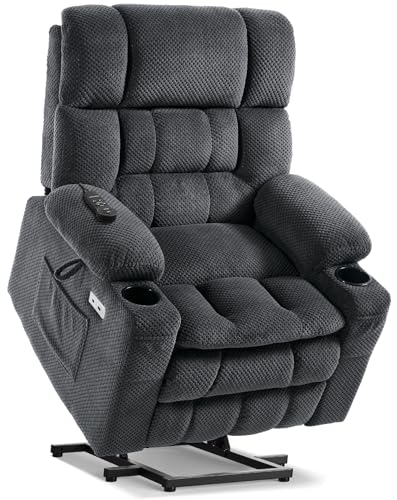
- Independent backrest and footrest
- Manual headrest; reclines to 175°
- Massage, lumbar heat, and USB ports
Best For: Soft-fabric comfort with flexible reclining and lift assistance
Full-Flat Pick
Triple-Motor Power Lift Recliner
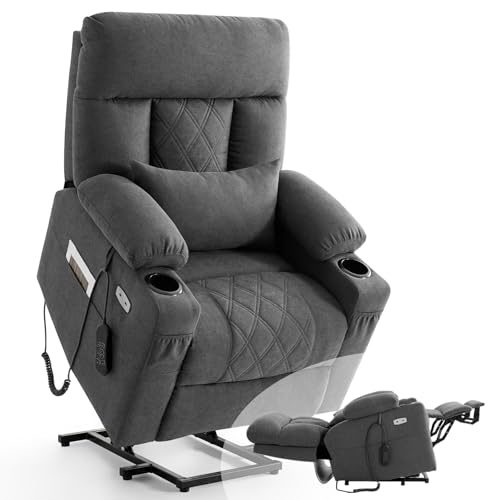
- Independent power headrest, backrest, and footrest
- Full 180° recline
- 4.7-inch footrest; massage and lumbar heat
Best For: Fully flat reclining with separately powered head support
Adjustable Headrest Pick
MCombo 7661 Triple-Motor Lift Recliner

- Three independently adjustable sections
- Footrest recommended for heights 5'1"–5'9"
- Timed vibration and separate lumbar heat
Best For: Independent positioning for users within the stated height range
Best for Taller Sleepers
Oversized Dual-Motor Lay-Flat Lift Recliner

- 24.8"-wide seat; 75.5" full reclined length
- Independent backrest and footrest controls
- Power lift with one-touch upright reset
Best For: People about 5'7"–6'2" wanting roomy, adjustable recline
Best Heavy-Duty Pick
Triple-Motor Recliner with Adjustable Headrest

- 400-pound capacity and 26"-wide seat
- Independent powered headrest adjustment
- 180° recline and power lift
Best For: Larger users prioritizing precise head and body positioning
Best for Medium-Height Users
Dual-Motor Recliner with Manual Headrest

- Designed for users about 5'3"–5'9"
- Independent 105°–170° power recline
- Three manual headrest settings
Best For: Medium-height users seeking adjustable elevated lounging
Plush Comfort Pick – TAMI TAMI T6015 Dual-Motor Lift Recliner
For shoppers comparing sleep recliners for sleep apnea relief, the TAMI TAMI T6015 offers independent backrest and footrest adjustments, making it easier to find a comfortable raised sleeping position. Its maximum recline is 175°, so it does not lie completely flat.
Best For: Someone who wants a soft-fabric lift chair with flexible positioning and a manually adjustable headrest.
Pros:
- Dual motors adjust the backrest and footrest independently.
- Power lift assists with standing; the headrest offers multiple manual settings.
- Eight vibration points, lumbar heat, USB-A and USB-C ports, and storage pockets add convenience.
Cons:
- The headrest must be adjusted manually.
- The 175° maximum recline falls short of fully flat.
The plush upholstery and pocket-spring cushioning make this a comfort-focused option. Positioning may help you rest more comfortably, but the chair is not a treatment for sleep apnea.
Full-Flat Pick – Triple-Motor Power Lift Recliner
Among sleep recliners for sleep apnea relief, this triple-motor chair stands out for separately powered headrest, backrest, and footrest adjustments. It moves from 45° to a full 180° recline, giving you a wide range of resting positions.
Best For: A buyer who wants powered head support, a fully flat option, and lift assistance in one chair.
Pros:
- Three motors let you position the headrest, backrest, and footrest independently.
- Reclines fully flat to 180° and includes a 4.7-inch extended footrest.
- Includes eight vibration points, independently operated lumbar heat, and a USB port.
Cons:
- The two shipping packages weigh 103 and 43 pounds, so moving them may require help.
- Footrest fit is described for users 5’7″ to 6’1″; check dimensions if you fall outside that range.
Its independent headrest control is the key advantage if you want to fine-tune your position without readjusting the entire chair. No recliner should be relied on to treat sleep apnea.
Adjustable Headrest Pick – MCombo 7661 Triple-Motor Lift Recliner
The MCombo 7661 is worth considering when shopping for sleep recliners for sleep apnea relief because its triple motor lets you adjust the headrest, backrest, and footrest separately. That flexibility can help you settle into a preferred resting position without claiming to address the underlying condition.
Best For: A shorter-to-average-height shopper who wants independent power positioning plus timed massage and heat.
Pros:
- Separately adjustable headrest, backrest, and footrest offer flexible positioning.
- The 4.7-inch extended footrest is recommended for users 5’1″ to 5’9″.
- Eight vibration points and separate lumbar heat offer 10-, 20-, or 30-minute shutoff settings.
- Two USB ports and cup holders keep essentials nearby.
Cons:
- The stated recommended height range may not suit taller users.
- It ships in three boxes and weighs 133.2 pounds overall.
This model is particularly appealing if powered headrest adjustment matters more than a simple two-motor setup. Confirm the seat dimensions and recommended height range before ordering, and continue any prescribed sleep apnea treatment.
Best for Taller Sleepers – Oversized Dual-Motor Lay-Flat Lift Recliner
Among sleep recliners for sleep apnea relief, this oversized chair is a roomy option for people who prefer to rest with their upper body elevated. Its independent backrest and footrest controls let you find a comfortable position, though it is not a treatment for sleep apnea.
Best For: Sleepers about 5’7″–6’2″ who want a wider seat, extended leg support, and power-lift assistance.
Pros:
- Dual motors adjust the backrest and footrest independently, with recline up to 180°.
- 24.8″-wide seat and extended footrest support a full reclined length of 75.5″.
- Power lift, one-touch upright reset, lumbar pillow, heat, and vibration add everyday convenience.
Cons:
- Its recommended height range may not suit shorter users.
- 350-pound weight capacity is lower than that of some heavy-duty options.
The generous dimensions are the main reason to consider this model. If you plan to sleep partly upright, the independent controls offer more positioning flexibility than a recliner with linked movements.
Best Heavy-Duty Pick – Triple-Motor Recliner with Adjustable Headrest
If you are comparing sleep recliners for sleep apnea relief, this triple-motor chair stands out for positioning flexibility rather than any proven medical benefit. It independently adjusts the backrest, footrest, and headrest, so you can fine-tune a comfortable elevated resting posture.
Best For: Users who want a spacious 26″ seat, a 400-pound weight capacity, and powered head-position adjustment.
Pros:
- Triple motors provide separate backrest, footrest, and 0°–30° headrest adjustment.
- 26″-wide seat, reinforced frame, and 400-pound weight capacity accommodate larger users.
- Reclines to 180° and includes power lift, lumbar heat, and eight vibration points.
Cons:
- Listed height guidance is 5’1″–6′, so taller shoppers should check fit carefully.
- Ships in three boxes, which may arrive on different days.
Choose this one if headrest control is especially important to your comfort; it offers an adjustment the dual-motor models here cannot make electrically. Confirm that its seat depth and stated height range work for you before ordering.
Best for Medium-Height Users – Dual-Motor Recliner with Manual Headrest
For shoppers looking at sleep recliners for sleep apnea relief, this medium-size chair offers adjustable back and leg positions plus a three-level manual headrest. Those features may help you find a preferred elevated resting angle, but the chair should not be considered a sleep apnea treatment.
Best For: Users about 5’3″–5’9″ who want independent power recline and a manually adjustable headrest.
Pros:
- Dual motors independently adjust the backrest and footrest through a stated 105°–170° range.
- Manual headrest offers three settings: 10°, 25°, and 35°.
- Extended footrest, power lift, lumbar heat, and eight-point vibration add comfort features.
Cons:
- Headrest adjustment is manual, not powered.
- 170° maximum recline does not reach a fully flat 180° position.
- The notes conflict on whether this model includes armrest storage; verify before buying.
Its stated height range makes it worth considering if larger recliners feel oversized. Check the listing for the exact armrest configuration, and choose it for adjustable elevated lounging rather than a lay-flat setup.
How We Picked the Best Sleep Recliners for Sleep Apnea Relief
We focused on the positioning features that matter most when a recliner will be used for rest: independent headrest adjustment, a usable range of recline angles, supportive leg positioning, and an appropriate seat size. We also considered practical details such as lift assistance, control accessibility, and room clearance. Heat and massage can be pleasant extras, but they do not treat sleep apnea and should not outweigh fit or positioning.
These selections are based on the listed chair features, not clinical testing or a claim that any recliner reduces apnea events. If you have obstructive sleep apnea, continue your prescribed CPAP or other treatment and ask your clinician whether sleeping in a recliner is appropriate for you.
Quick Comparison of Sleep Recliners for Sleep Apnea Relief
The six picks fall into a few useful groups. Dual-motor models offer separate positioning controls and include options with lay-flat reclining and heat and massage. Triple-motor models add more independent adjustment; the lineup includes the MCombo 7661 in a medium size and a big-and-tall option. An oversized lay-flat chair may suit shoppers who need more space, while a chair with an extended footrest may better support longer legs. Check each model’s stated dimensions and motor functions before deciding; similar product names do not guarantee identical adjustments.
Key Buying Factors for Sleep Recliners for Sleep Apnea Relief
Head, Neck, and Torso Position
Look for a headrest that supports your neck without pushing your chin toward your chest. Independent adjustment can help you find a comfortable angle while keeping your torso elevated. A “lay-flat” capability adds flexibility, but a fully flat position is not necessarily the one you want for sleep. Because a recliner bends at the hips, ask your clinician if you need a specific elevation or posture.
Fit and Overnight Comfort
Check seat width and depth, back height, footrest length, and weight capacity against your measurements. Your feet should be supported and your shoulders should rest comfortably against the back. Consider whether you can change positions easily and whether the armrests support getting in and out. For frequent overnight use, confirm the chair’s warranty terms and ask the seller whether it is intended for extended sleeping.
CPAP Setup and Safety
If you use CPAP, make sure the hose can reach the chair without pulling on your mask or creating a trip hazard. Check outlet placement, cord routing, and the space needed behind and in front of the chair. Lift assistance can make standing easier, but it does not eliminate fall risk. Follow your clinician’s advice about sleep position and treatment rather than relying on elevation alone.
Who Should Buy Which Sleep Recliners for Sleep Apnea Relief?
Choose a triple-motor model if fine-tuning your posture is the priority; consider the medium MCombo 7661 only if its dimensions suit you. Compare the big-and-tall and oversized options if standard seats feel restrictive. Look at an extended-footrest model if leg support is your main fit issue, or a dual-motor lay-flat chair if you want a wider range of positions. Whichever you choose, confirm the chair fits your body and space before paying for comfort features.