Basements can be tough for robot vacuums: dim lighting, mixed flooring, dust, pet hair, and cluttered layouts can all challenge navigation and cleaning performance.
This roundup highlights the best robot vacuum for basements in 2026, focusing on models that handle low-light mapping, strong suction, and low-maintenance operation.
Best 10 Robot Vacuum for Basements Picks for 2026
Basement-Friendly AutoEmpty Pick
Roomba 105 Combo Robot Vacuum & Mop

- Self-empties for up to 75 days
- LiDAR mapping with stair sensors
- Avoids carpets while mopping
Best For: Basements with mixed floors and rugs
High-Power Pet-Hair Option

- High suction for carpets and hard floors
- Bagless self-empty base for 60 days
- LiDAR navigation works in the dark
Best For: Dusty basements with pets and mixed flooring
Simple Dry-Cleaning Choice

- Self-empties for up to 75 days
- Strong suction with multi-surface brush
- LiDAR mapping and spot cleaning
Best For: Basements where vacuuming alone is enough
Deep-Clean Combo Pick
Roborock Q7 M5 Robot Vacuum and Mop

- 10,000Pa suction for carpets and hard floors
- Adjustable mopping with three water levels
- LiDAR mapping with app-based no-go zones
Best For: Basements needing vacuuming and mopping in one pass
Basement Deep-Clean Pick
Shark AI Robot Vacuum with Self-Empty Base

- Strong suction for carpet and hard floors
- 60-day self-empty base with HEPA filtration
- LiDAR mapping with Matrix Clean coverage
Best For: Basements with mixed flooring and pet hair
High-Suction Budget Option
ILIFE A30s 10000Pa Robot Vacuum
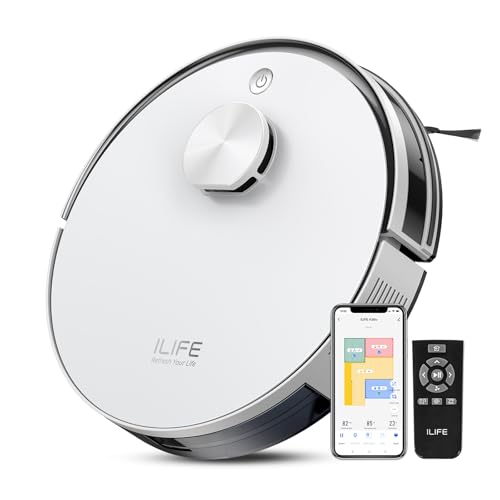
- Up to 10,000Pa suction in Spot Mode
- LiDAR mapping with no-go zone controls
- Dual anti-tangle brushes for pet hair
Best For: Basements needing strong suction and simple app control
Hands-Free Sweeping and Mopping

- 90-day self-emptying base for low maintenance
- LiDAR mapping with up to 5 saved floor maps
- Vacuum and mop with carpet suction boost
Best For: Basements with mixed floors that need vacuuming and mopping
Compact LiDAR Pick
iRobot Roomba 105 Vac Robot Vacuum

- 70X suction for carpet and hard floors
- LiDAR mapping cleans in neat rows
- Anti-fall sensors and recharge-resume support
Best For: Basement cleaning where simple vacuuming and mapped coverage matter
High-Power Whole-Floor Choice

- 8000Pa suction with automatic carpet boost
- Vacuum-and-mop design with large water tank
- Self-emptying dock for up to 90 days
Best For: Large finished basements that need strong suction and low upkeep
Hands-Free Combo Upgrade
iRobot Roomba 105X Robot Vacuum & Mop

- Vacuum and mop in one run
- AutoEmpty dock for up to 75 days
- LiDAR mapping with room targeting
Best For: Finished basements that need both floor cleaning and less frequent emptying
Basement-Friendly AutoEmpty Pick – Roomba 105 Combo Robot Vacuum & Mop
If you want a robot vacuum for basements that can handle mixed flooring and keep upkeep simple, the Roomba 105 Combo is built around strong suction, LiDAR mapping, and an AutoEmpty dock. It also avoids carpets while mopping, which is useful in basement spaces that often switch between hard floors and area rugs.
Best For: Basement owners who want a self-emptying vacuum-mop combo with easy app control and carpet-safe mopping.
Pros:
- AutoEmpty dock stores dirt for up to 75 days and traps 99% of allergens as small as 0.7 microns.
- 70X power-lifting suction plus a multi-surface brush and edge-sweeping brush help with dirt and dust bunnies.
- ClearView LiDAR maps the space and helps it steer around obstacles while sensors prevent falls down stairs.
- Automatically avoids carpets while mopping, so rugs stay dry without extra setup.
Cons:
- Needs a 2.4 GHz network for setup and operation.
- Battery life is listed at 100 minutes, which may require recharging in larger basements.
- As a combo model, it may be more than you need if you only want vacuuming.
Overall, this is a practical choice if your basement needs frequent cleanup and you want less hands-on maintenance. The combination of self-emptying, smart mapping, and carpet-aware mopping makes it easy to use in real-world basement layouts.
High-Power Pet-Hair Option – Shark AI Ultra Robot Vacuum
For a robot vacuum for basements that prioritizes strong pickup and low-maintenance emptying, the Shark AV2511AE stands out with high suction, Matrix Clean coverage, and a bagless self-empty base. Its LiDAR mapping and object detection help it work through basement layouts more efficiently, even when lighting is less ideal.
Best For: Basements that need strong suction, pet-hair pickup, and a bagless self-empty system.
Pros:
- High suction captures dirt, debris, and pet hair on carpets and hard floors.
- Matrix Clean uses multiple passes for deeper whole-home coverage.
- Bagless self-empty base holds up to 60 days of dirt and debris.
- 360° LiDAR navigation maps spaces accurately, even in the dark.
Cons:
- Runtime is up to 90 minutes, which may be limiting in larger basements.
- Not a vacuum-mop combo, so it only handles dry debris.
- At 15.3 pounds, the system is relatively heavy overall.
This is a strong fit if your basement sees a lot of dust, debris, or pet hair and you want a robot that can clean methodically. The bagless base also keeps routine maintenance straightforward.
Simple Dry-Cleaning Choice – Roomba 105 Vac Robot Vacuum
If you need a robot vacuum for basements and want to keep things simple, the Roomba 105 Vac focuses on strong suction, LiDAR mapping, and hands-free emptying without the mop hardware. It is a straightforward option for basement floors where you mainly want reliable vacuuming and room targeting.
Best For: Basements where you only need vacuuming, not mopping, and want easy targeted cleaning.
Pros:
- Self-empties for up to 75 days using a bag that traps 99% of allergens as small as 0.7 microns.
- 70X power-lifting suction and a multi-surface brush help remove dirt and dust bunnies.
- ClearView LiDAR supports precise mapping, obstacle avoidance, and stair-fall prevention.
- Spot cleaning mode targets one area for up to 5 minutes when a basement section needs extra attention.
Cons:
- No mopping function, so it only handles dry cleaning.
- Needs a 2.4 GHz network for setup and operation.
- Battery life is listed as 100 minutes, which may not cover very large spaces in one run.
For a basement cleanup routine centered on dust, crumbs, and debris, this model keeps the feature set focused and easy to manage. It is a good pick if you want strong vacuum performance without paying for mop functions you may not use.
Deep-Clean Combo Pick – Roborock Q7 M5 Robot Vacuum and Mop
For a robot vacuum for basements that needs serious suction and a mop in the same pass, the Roborock Q7 M5 is built for deeper debris pickup and adjustable wet cleaning. Its LiDAR navigation, app controls, and tangle-reducing brush design make it a flexible fit for basement spaces with dust, pet hair, and hard floors.
Best For: Basements that need strong vacuuming plus adjustable mopping in one robot.
Pros:
- 10,000Pa HyperForce suction helps lift dust, dirt, pet hair, and debris from carpets and hard floors.
- Dual anti-tangle design with JawScrapers and a tangle-free side brush helps reduce hair wrap.
- Three water flow levels let you adjust mopping intensity for wood, tile, or stubborn stains.
- PreciSense LiDAR builds maps quickly, and the app supports schedules, no-go zones, and suction settings.
Cons:
- It does not include an auto-empty dock, so you will need to empty the bin yourself.
- The product details show separate vacuum and mop components rather than a fully hands-off base.
- Mop-only runtime is highlighted more than all-purpose runtime, so large mixed-cleaning jobs may take planning.
If your basement has both hard floors and carpets and you want a single machine for everyday pickup plus occasional mopping, this model offers a strong feature mix. It is especially appealing when customizable cleaning matters more than a self-empty base.
Basement Deep-Clean Pick – Shark AI Robot Vacuum with Self-Empty Base
If you want a robot vacuum for basements that can handle dust, pet hair, and mixed flooring, this Shark model is built for steady deep cleaning. Its LiDAR mapping, Matrix Clean Navigation, and strong suction help it cover rooms methodically, while the self-emptying base cuts down on upkeep.
Best For: Basement spaces with carpet and hard floors where you want strong suction and less frequent emptying.
Pros:
- Powerful Shark suction lifts dirt and debris from carpet and hard floors.
- Matrix Clean Navigation makes multiple passes for more complete coverage.
- Self-emptying base holds up to 60 days of debris with HEPA filtration.
- LiDAR mapping helps it navigate and adapt to layout changes.
Cons:
- It is vacuum-only, so it does not mop basement floors.
- At 15.3 pounds, the base is relatively substantial.
Overall, this is a strong choice if your basement sees frequent dust buildup or pet hair and you want a more hands-off cleaning routine. The combination of mapping, self-emptying, and HEPA filtration makes it practical for regular use.
High-Suction Budget Option – ILIFE A30s 10000Pa Robot Vacuum
For a robot vacuum for basements where pickup power matters, the ILIFE A30s focuses on strong suction and straightforward app-based control. It uses LiDAR mapping to plan efficient routes, and its dual anti-tangle brush design is meant to handle pet hair with less hassle.
Best For: Basement cleaning when you want high suction, room mapping, and simple controls without mopping.
Pros:
- Up to 10,000Pa suction in Spot Mode for deep cleaning.
- LiDAR navigation and SLAM help map rooms and reduce missed spots.
- Dual anti-tangle brushes are suited to pet hair cleanup.
- App control includes no-go zones, virtual walls, and carpet boost.
Cons:
- Vacuum-only design means no mopping function.
- Requires 2.4GHz Wi-Fi for app setup and control.
This is a practical pick if your basement is mostly carpet and hard floor and you want strong suction without paying for extra features. The large dustbin and long runtime also make it easy to run less often.
Hands-Free Sweeping and Mopping – Tikom L8000 Plus Robot Vacuum
If you want a robot vacuum for basements that can sweep, mop, and empty itself, the Tikom L8000 Plus offers a flexible all-in-one setup. Its LiDAR navigation, multi-floor mapping, and automatic suction boost on carpet make it a useful option for basement cleanup routines.
Best For: Basement owners who want vacuuming, light mopping, and hands-free maintenance in one machine.
Pros:
- Self-emptying base supports up to 90 days of hands-free cleaning.
- LiDAR mapping can save up to 5 multi-floor maps.
- Automatically boosts suction to 6000Pa on carpet.
- App and voice control include no-go zones and no-mop zones.
Cons:
- Mop mode requires care around carpet and may need the mop holder removed or no-go zones set.
- 6000Pa max suction is lower than some higher-output vacuum-only models.
For basements with a mix of hard floors and carpet, this model stands out because it combines cleaning modes with low-maintenance operation. Just plan your mop settings carefully if your basement has a lot of carpeted area.
Compact LiDAR Pick – iRobot Roomba 105 Vac Robot Vacuum
If you want a robot vacuum for basements that can handle mixed flooring, the Roomba 105 Vac is a straightforward option with strong suction and LiDAR navigation. It maps the area in neat rows, avoids stairs, and offers app-based room targeting, which is useful when a basement has separate zones or cluttered corners.
Best For: Basement owners who want reliable vacuuming on carpet and hard floors with simple controls.
Pros:
- 70X power-lifting suction helps pull up dirt and dust bunnies.
- ClearView LiDAR maps quickly and cleans in neat rows for better coverage.
- Anti-fall sensors help keep it safer around stairs.
- Recharges and resumes, so larger basement jobs can finish in stages.
Cons:
- Vacuum-only design, so it does not mop.
- 2.4 GHz Wi‑Fi setup is required.
- No self-emptying dock included.
For a basement cleaning routine centered on debris pickup and easy scheduling, this Roomba keeps the feature set focused and practical. It is a good fit if you want mapped cleaning without moving up to a more complex combo model.
High-Power Whole-Floor Choice – MONSGA Robot Vacuum and Mop
The MONSGA robot vacuum and mop is a strong robot vacuum for basements if you want one machine for dust, debris, and damp mopping on finished floors. Its 8000Pa suction, LiDAR mapping, and self-emptying dock make it appealing for larger basement spaces that collect frequent messes.
Best For: Larger basements with mixed flooring where hands-off maintenance is a priority.
Pros:
- 8000Pa max suction and automatic carpet boost for deeper debris pickup.
- Vacuum-and-mop design with a 460ml water tank for one-pass cleaning.
- Dual anti-tangle system helps reduce hair wrap.
- Self-empties into a 4L bag for up to 90 days of low-maintenance use.
Cons:
- Mopping may not be ideal for every unfinished basement surface.
- Supports 2.4GHz Wi‑Fi only.
- Requires more setup than a basic vacuum-only robot.
This is the most feature-packed option here for busy households that want less day-to-day maintenance. If your basement needs both vacuuming and occasional mopping, the MONSGA gives you a lot of capability in one robot.
Hands-Free Combo Upgrade – iRobot Roomba 105X Robot Vacuum & Mop
If you want a robot vacuum for basements that also handles hard-floor mopping, the Roomba 105X Combo is built for convenience. It combines 70X suction, smart LiDAR mapping, and an AutoEmpty dock that can keep cleanup hands-free for up to 75 days, making it well suited to finished basement spaces that see tracked-in dirt.
Best For: Finished basements where you want vacuuming, mopping, and self-emptying in one robot.
Pros:
- Vacuum and mop together to save time on hard floors.
- AutoEmpty dock stores debris in a sealed bag for up to 75 days.
- SmartScrub helps with sticky spots and dried-on messes.
- LiDAR mapping and no-go zones support efficient, targeted cleaning.
Cons:
- Battery life is listed at 100 minutes.
- Mopping is designed for hard floors, not carpets.
- Uses 2.4GHz Wi‑Fi for setup and operation.
This model makes the most sense if your basement is more of a finished living area than a rough utility space. It offers the convenience of self-emptying plus combo cleaning, which reduces how often you need to step in.
How We Picked the Best Robot Vacuum for Basements
We prioritized models with reliable navigation, enough suction for dust and debris, and features that reduce upkeep in harder-to-access basement spaces. Self-emptying docks, multi-surface cleaning, and mapping systems mattered more than gimmicks. For a Robot Vacuum for Basements, consistency is more important than flashy app extras.
Quick Comparison
In general, choose higher-suction models for carpet, pet hair, or unfinished floors; pick mop-combo units if you have sealed hard surfaces; and favor self-emptying bases if the basement is used often or collects heavy debris. LiDAR-based navigation is especially helpful in darker rooms and irregular layouts.
Key Buying Factors for Robot Vacuum for Basements
Navigation and Low-Light Performance
Basements are often darker than the rest of the home, so LiDAR or similarly advanced mapping is a major advantage. These systems help the vacuum avoid getting lost, miss fewer spots, and clean more efficiently around storage items or tight corners.
Suction and Brush Design
Look for strong suction if your basement has carpet, rugs, or tracked-in dirt. Tangle-resistant brushes can also help if the area sees pet hair, string, or dust bunnies. A high-pickup floorhead matters as much as raw power.
Maintenance Features
Self-emptying docks are valuable in basements because they reduce how often you need to carry the vacuum upstairs. Large dust bins, washable filters, and easy-to-clean rollers also improve long-term convenience.
Floor Type and Mopping Needs
If your basement has sealed concrete, vinyl, or tile, a combo model may be useful for light cleanup. If the space is mostly carpeted or unfinished, a vacuum-only model is usually the better fit. Mop features are best treated as maintenance for dust and light spills, not deep scrubbing.
Who Should Buy Which Robot Vacuum for Basements?
Choose a premium self-emptying model if you want the least hands-on maintenance and have a busy basement, pets, or heavy debris. Pick a strong midrange vacuum if your main goal is dependable cleaning on carpet or hard floors without paying for extra features. If your basement is simple, open, and lightly used, a more affordable option can still do the job well.
For most buyers, the best Robot Vacuum for Basements is the one that matches your flooring, lighting, and cleanup routine—not just the one with the highest suction number.